Radical hope for the next four years and beyond
- Vivienne Wallace
- Mar 10, 2025
- 4 min read

What if we just want to believe we'll be alright?
Hope isn’t a feeling; it’s a way of thinking—that the future will be better than today, and we have the power to make it so.(1) It’s a framework for action. And it’s essential. Humans need hope for our happiness and wellbeing.
So, what if we doubt the future will be better than today? What if we expect it will be worse?
My last article on Solarpunk Thinking talked about the Planetary Boundaries concept and how humans must live, laugh, and love without overwhelming Earth’s life support systems. Soon after, the USA’s 45th President was “voted” back as the country’s 47th. What can I say that hasn’t already been said? His administration lacks the capacity and motivation to address environmental, social, and economic injustice.
In Los Angeles, California, a massive wildfire worsened by climate heating wiped out homes and communities. Meanwhile, in Switzerland voters rejected writing the Planetary Boundaries into their constitution. It was claimed doing so would prove “ruinous for the state’s finances”.(2) As if the impacts of climate heating and other environmental degradations are not. As if homes and communities work for the economy, not the other way around.
I can’t lie. My hope is lower now than the last time I wrote.(3)
Time for radical hope
At times like this we need hope of a more radical kind. In short, radical hope.(4)
The ingredients for hope and radical hope are the same, but their imagined destinations are different. Instead of striving for a better future, radical hope commits to a future goodness, even if we don’t know what it is. We believe we can adapt; we believe we will be alright.
What does radical hope look like?
If you want to know what radical hope looks like, it’s helpful to consider colonised countries like Aotearoa or Australia or North America. Because indigenous people know about carrying on, even after cultural devastation. For instance, the Crow people of North America.
The Crow were nomadic hunters (of bison) and gatherers on the Plains of Wyoming, Montana, and North Dakota. Dreaming was essential to Crow cultural life—young men were sent away to dream dreams; elders interpreted those dreams.
When challenged to envisage the Crow people’s future, the young man Plenty Coups dreamt of bison with unusual tails and bellows and spotted coats covering the Plains. He saw strong winds flatten a forest; only one tree—the home of a chickadee—remained. He saw himself as an old man.
Crow elders considered Plenty Coups’ dream deeply prophetic: If the Crow wanted to keep their lands, they must work with the white man. So, when he became chief, Plenty Coups—guided by his dream(5)—exercised a different kind of courage in leadership; not the courage of the mighty Crow warrior, but the tiny chickadee, known for its adaptability.
"When the buffalo went away the hearts of my people fell to the ground and they could not lift them up again. After this nothing happened." - Chief Plenty Coups
Have you ever felt like your heart has fallen to the ground and can’t get up? That nothing that happens will ever be the same again?
Like me, you may not have experienced the cultural devastation of the Crow (or Aboriginal or Māori) people. But fear, grief, anguish, and despair are shared human experiences.
Chief Plenty Coups navigated his people toward goodness in an unknown future when their entire way of life, even what it meant to be a Crow person, was lost. His actions—working with the federal Government, even fighting alongside them—secured the Crow the fifth largest reservation in the USA, on their ancestral homeland.(6)
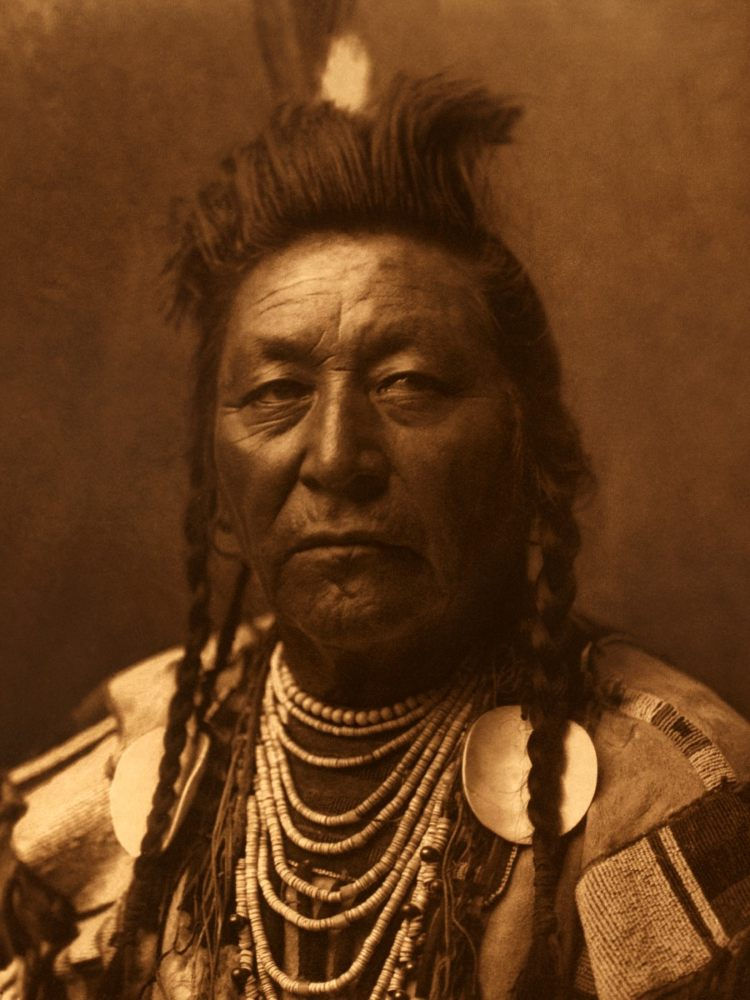
It’s poignant that the lesson in radical hope we, in modern post-colonial nations, desperately need resides in the stories of indigenous people devastated in the building of those nations.
Hope, as ever, is a framework for action
Let’s commit to a future goodness and continue hopeful work in environmental, social, and economic justice.
"We may not know what may happen today, but let us act as though we were the Seven Stars in the sky that live forever. Go with me as far as you can and I will go with you while there is breath in my body." - Chief Plenty Coups

Chan Hellman PhD is a hope researcher at the University of Oklahoma. To learn more, watch his Tedx Talk on the science of hope.
Hope demands willpower, and sometimes willpower can run low. It needs regular nourishment.
I learnt about the concept of radical hope in the book Radical Hope: Ethics in the face of cultural devastation by Jonathan Lear. Lear’s book also introduced me to the story of Chief Plenty Coups.
According to hope researcher Chan Hellman, imagination is the instrument of hope. If you substitute “dream” with “imagination”, you can see the ingredients for hope in Chief Plenty Coups’ thinking and acting.
Other tribes were forcibly displaced from their homelands. For example, the Trail of Tears.


Comments